
For homes near busy roads, rail corridors or noisy neighbourhoods, windows can be one of the weaker points in the building envelope. The right acoustic window can make a noticeable difference, but the result depends on the complete system.
For homeowners comparing acoustic windows Brisbane, the most useful starting point is the complete window specification rather than one feature in isolation.
Quick Summary
Acoustic performance is influenced by glass thickness, laminated construction, cavity width, frame design, seals and installation. The best specification is the one matched to the type of noise affecting the room.
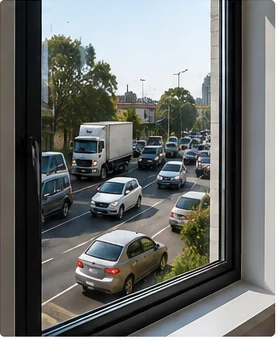
Why traffic noise is difficult to block
Traffic noise contains a broad range of frequencies. Cars, trucks, motorcycles and tyre noise do not all behave in exactly the same way, and low-frequency noise can be particularly difficult to control.
This is why simply adding a second pane does not automatically produce the same acoustic result for every home. The glass and frame should be selected around the actual noise problem.
Glass is a major part of acoustic performance
Different glass thicknesses can respond differently to sound. Laminated acoustic glass adds an interlayer designed to improve sound attenuation and can be useful for traffic and urban noise.
Asymmetrical glass combinations can also be considered because using different pane thicknesses can help avoid some resonance effects. The final result still depends on the complete window assembly.
Traffic Noise Control
Select glazing around the frequency characteristics of traffic and neighbourhood noise.
Acoustic Glass
Laminated acoustic glass can provide additional sound attenuation compared with basic clear glass.
Sealed Frames
Quality seals and compression closing help minimise unwanted air paths.
Whole-Room Approach
Walls, doors, vents and installation all contribute to the final acoustic result.
The cavity and frame matter
The cavity between panes separates the two layers of glass and contributes to the acoustic performance of the insulated glass unit. Frame design and seals then determine how effectively the unit is integrated into the opening.
uPVC frames can provide a continuous sealed frame system with good thermal properties. The seals and the way the frame is installed are particularly important because small air paths can undermine acoustic performance.
Installation can make or break the result
Even a high-performing acoustic glazing unit can underperform if the surrounding installation has gaps, poor seals or weak interfaces. The wall, reveals, trickle vents, doors and other openings also affect the overall room.
For a noisy property, it is therefore better to discuss the whole room and building envelope rather than expecting one window to solve every sound path.
Tilt-and-turn windows for acoustic applications
Tilt-and-turn windows can provide a strong compression seal when fully closed, which can be useful for both weather sealing and acoustic performance. The hardware must be appropriate for the sash size and glass weight.
The correct opening configuration should be selected for the dimensions and intended use of the window.
Set a realistic target
Acoustic ratings such as Rw and Ctr are useful for comparing products, but they are not a guarantee of the exact noise level inside a particular room. The wall construction, room layout and other openings also matter.
If traffic noise is the main problem, describe the sound to your supplier and ask for a specification aimed at that noise source.
The complete window matters
A window is a system. The glazing, spacer, uPVC frame, seals, hardware and installation all contribute to the finished result. This is why a quote should identify the important components instead of simply saying that a product is "double glazed".
Comfort Windows & Doors supplies custom uPVC windows and doors for Brisbane, with service also available across the Sunshine Coast and Gold Coast.
Related Guides
Making the right choice
The best specification is not necessarily the most expensive one. It is the specification that addresses the conditions of the home, the orientation of the opening, the type of noise or heat you are trying to manage, and the way the room is used.
If you are comparing options, ask for a clear, like-for-like quotation and make sure the glass, frame, configuration and installation assumptions are easy to identify.
Thinking about upgrading your windows?
Tell us what you want to improve — heat, noise, comfort or a combination — and we can help you compare suitable uPVC double-glazing options.
Frequently Asked Questions
Do double glazed windows stop traffic noise?
They can significantly reduce noise entering through the window, but the amount depends on the glass, frame, seals, installation and the type of noise.
Is laminated glass better for noise?
Acoustic laminated glass can be very useful because its interlayer is designed to improve sound attenuation. The exact result depends on the complete glazing configuration.
Are uPVC windows good for acoustic performance?
A well-designed and well-sealed uPVC window can provide a strong acoustic system, especially when paired with suitable acoustic glazing.