
When homeowners compare uPVC and aluminium windows, it is important to separate the frame material from the glazing. Aluminium windows can also be double glazed, so the real comparison is usually between different complete window systems.
For homeowners comparing uPVC vs aluminium windows Brisbane, the most useful starting point is the complete window specification rather than one feature in isolation.
Quick Summary
uPVC offers naturally low thermal conductivity and can provide strong thermal performance, while aluminium offers a slim, rigid frame aesthetic and is widely used in Australian construction. The right choice depends on priorities, design and the complete system specification.
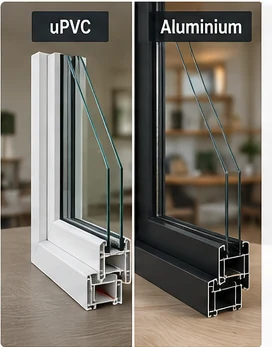
uPVC and aluminium are different frame materials
uPVC is a polymer-based frame material with low thermal conductivity. Aluminium is a metal with high thermal conductivity, so thermally improved aluminium systems generally use a thermal break to reduce heat flow through the frame.
This distinction matters because the glass is only one part of the finished window. A high-performance glass unit installed into a thermally weak frame will not perform in the same way as a complete high-performance window system.
Thermal performance
For homeowners focused on indoor comfort, frame conductivity is worth considering alongside the glass. uPVC can provide a thermally efficient frame without relying on a separate thermal-break concept.
Aluminium can also achieve strong performance when a properly designed thermally broken system is used. When comparing quotes, ask for the complete system rather than assuming that the material name alone tells you how the window will perform.
Thermal Performance
Compare frame conductivity and glazing together when assessing indoor comfort.
Acoustic Comfort
Look at the complete sealed window system rather than glass alone.
Design Flexibility
Consider sightlines, opening styles, colours and the architecture of the home.
Low Maintenance
Both systems can be low maintenance when correctly manufactured and installed.
Acoustic comfort
Noise reduction depends on the whole assembly. Glass thickness, laminated acoustic glass, cavity width, seals, frame design and installation all influence the result.
A well-sealed uPVC window can be particularly useful where acoustic comfort and thermal performance are both priorities. Aluminium systems can also be specified for acoustic performance, but the exact configuration should be assessed.
Appearance and design
Aluminium is often selected for its slim sightlines and crisp contemporary appearance. uPVC frames can provide a different visual character while offering a range of colours, configurations and opening styles.
For replacement projects, the frame depth and sightline should be considered alongside the home's existing architecture. The most visually attractive option is usually the one that fits the building rather than simply following a material trend.
Maintenance and long-term use
Both materials can provide long service when correctly manufactured, installed and maintained. uPVC does not require painting, while powder-coated aluminium is also designed for relatively low maintenance.
Hardware, seals, drainage and installation quality are just as important as the frame material. A window that is difficult to operate or poorly sealed will not deliver its intended benefits.
Which should you choose?
If thermal comfort and acoustic performance are high priorities, a quality uPVC double glazed system is worth serious consideration. If very slim sightlines, a particular architectural appearance or specific structural requirements are more important, aluminium may be preferable.
The best comparison is a like-for-like one: compare glass, frame, seals, hardware, configuration, installation and any available performance data.
The complete window matters
A window is a system. The glazing, spacer, uPVC frame, seals, hardware and installation all contribute to the finished result. This is why a quote should identify the important components instead of simply saying that a product is "double glazed".
Comfort Windows & Doors supplies custom uPVC windows and doors for Brisbane, with service also available across the Sunshine Coast and Gold Coast.
Related Guides
Making the right choice
The best specification is not necessarily the most expensive one. It is the specification that addresses the conditions of the home, the orientation of the opening, the type of noise or heat you are trying to manage, and the way the room is used.
If you are comparing options, ask for a clear, like-for-like quotation and make sure the glass, frame, configuration and installation assumptions are easy to identify.
Thinking about upgrading your windows?
Tell us what you want to improve — heat, noise, comfort or a combination — and we can help you compare suitable uPVC double-glazing options.
Frequently Asked Questions
Is uPVC more energy efficient than aluminium?
uPVC has low thermal conductivity and can provide strong thermal performance. Aluminium can also perform well when using a suitable thermally broken system.
Can aluminium windows be double glazed?
Yes. Double glazing describes the glass unit, not the frame material. Aluminium frames can be designed to accept double glazing.
Which is better for noise reduction?
There is no universal answer based on frame material alone. Glass, seals, frame design and installation all influence acoustic performance.