
Large windows can make a Brisbane room feel bright and open, but they can also become a major source of unwanted solar heat. The glass specification, window orientation and shading strategy all influence the result.
For homeowners comparing double glazed windows reduce heat Brisbane, the most useful starting point is the complete window specification rather than one feature in isolation.
Quick Summary
Double glazing can reduce heat transfer through the window compared with single glass. Low-E glass and appropriate shading can further improve the overall approach, especially where strong solar exposure is present.
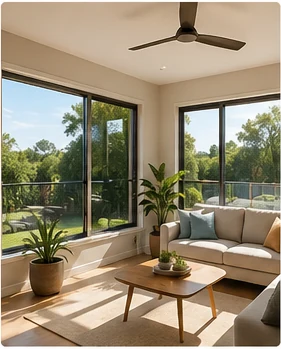
Where does heat enter through windows?
Heat can reach a room through direct solar radiation and through heat transfer across the glazing and frame. A large west-facing window can be particularly challenging because afternoon sun arrives when outdoor temperatures may already be high.
The solution is therefore not simply 'more glass' or 'double glazing'. The window should be specified around the exposure and the way the room is used.
How double glazing helps
A double glazed unit separates two panes with an insulating cavity. This reduces direct heat transfer through the glazing compared with a single pane.
The effect you notice in the room depends on the entire window system and the building. Walls, roof insulation, doors, ventilation and shading all contribute to the indoor temperature.
Solar Control
Consider glass and shading together for windows exposed to strong Brisbane sun.
Reduced Heat Transfer
Double glazing can reduce heat transfer through the glazing compared with single glass.
Low-E Options
Low-E glass can be selected where additional thermal or solar-control performance is required.
Whole-Home Approach
Windows work best alongside insulation, shading, ventilation and sensible building design.
The role of Low-E glass
Low-E coatings are designed to influence radiant heat transfer. Depending on the product and configuration, Low-E glazing can help control unwanted heat transfer while still allowing useful natural light into the home.
The right Low-E specification should be selected according to orientation and performance requirements rather than assuming that one glass is ideal for every elevation.
Why shading still matters
External shading can stop solar radiation before it reaches the glass, which makes it an important part of heat-control strategy. Eaves, awnings, screens, shutters and other shading solutions can complement high-performance glazing.
Internal blinds and curtains can also help, although preventing direct sun from reaching the glass is generally a more direct strategy for solar control.
Brisbane window orientation
West-facing openings deserve particular attention because of afternoon solar exposure. Large areas of glass should be assessed for both solar heat and glare.
A room-by-room assessment can help identify where a higher-performance glass specification provides the most value rather than applying the same package everywhere.
What should you ask a window supplier?
Explain which rooms overheat, which windows receive afternoon sun and whether glare is a concern. Ask the supplier to recommend glass based on the orientation and the complete window system.
A useful quote should identify the glass, frame and opening style. If a supplier simply labels a product 'energy efficient' without explaining the configuration, ask for more detail.
The complete window matters
A window is a system. The glazing, spacer, uPVC frame, seals, hardware and installation all contribute to the finished result. This is why a quote should identify the important components instead of simply saying that a product is "double glazed".
Comfort Windows & Doors supplies custom uPVC windows and doors for Brisbane, with service also available across the Sunshine Coast and Gold Coast.
Related Guides
Making the right choice
The best specification is not necessarily the most expensive one. It is the specification that addresses the conditions of the home, the orientation of the opening, the type of noise or heat you are trying to manage, and the way the room is used.
If you are comparing options, ask for a clear, like-for-like quotation and make sure the glass, frame, configuration and installation assumptions are easy to identify.
Thinking about upgrading your windows?
Tell us what you want to improve — heat, noise, comfort or a combination — and we can help you compare suitable uPVC double-glazing options.
Frequently Asked Questions
Will double glazing make my Brisbane home cooler?
It can reduce heat transfer through the windows, but indoor temperature also depends on solar exposure, shading, insulation and ventilation.
Is Low-E glass good for Brisbane?
It can be useful, particularly where thermal or solar control is important. The appropriate specification depends on orientation and the overall window design.
Should I still use blinds or external shading?
Yes. Shading remains an important part of solar control even when high-performance glazing is installed.